The new era of artist entrepreneurs
by Masoud Loghmani & Fred Graver • November 4, 2026
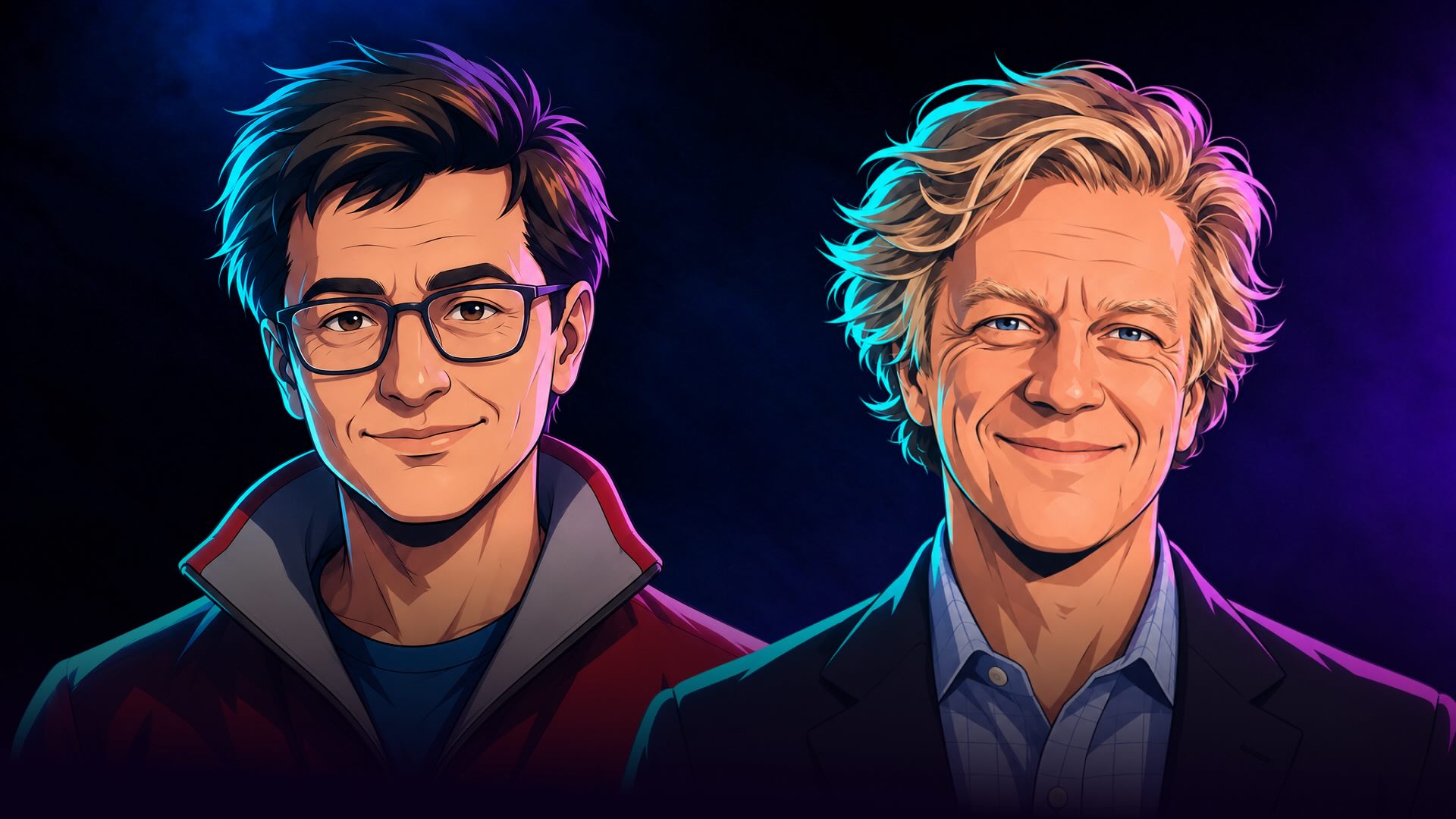
Studio Jadu Founder & CEO Masoud Loghmani and Emmy-winner Fred Graver on giving artists unprecedented control over their creative careers
In the summer of 2023, temperatures ran high—and so did emotions, in response to the rise of AI.
The 2023 Writers Guild strike was powered by legitimate concerns about what AI could mean for human creativity, artistic livelihoods, and the future of the entertainment industry. The turmoil over what to do with this new technology has been constant since. These concerns are valid, and rooted in fundamental questions about what we call art, who gets to create it, and who benefits from it.
But what if there is a way to use this technology to enable more artists to bring their own stories to life, and take greater control of their creative careers?
In this post, we’ll share our thoughts on that.
“We” are Masoud Loghmani and Fred Graver. And while we approach this issue from different angles, we arrive in the same place.
Masoud spent years building creator monetization products at YouTube and TikTok before founding Studio Jadu. Fred is an Emmy Award-winning writer and producer whose career has spanned traditional entertainment and emerging technologies, from working with Disney Imagineers to serving as Twitter's Head of TV.
We both believe that the most important opportunity presented by AI is not that you can produce more slop faster and cheaper. The real game-changing opportunity is to give more artists the tools and opportunities to build sustainable creative businesses around their original ideas.
We also believe that while AI slop may have its moment—everyone making and posting their own version of flying dinosaurs fighting Superman—the sizzle will eventually fizzle. If content is going to have any chance of connecting with audiences and generating revenue, stories will still need to be rooted in the human experiences of their creators.
That's not an artist's defensive posture or a convenient PR gimmick. It's both a creative conviction and a rational business observation. It's why Studio Jadu exists, and why creators like Fred have joined us as pioneers. (More on that next week!)
The creator economy has already shown us another way
We don't have to imagine what an alternative entertainment business model might look like. We've been watching one develop on YouTube for nearly two decades.
For years, independent YouTube creators have been doing what traditional Hollywood has made extraordinarily difficult: developing original ideas, bringing them directly to audiences, and building businesses around the communities that form around their work. They didn't need a studio to greenlight their concepts or a network executive to decide whether their stories deserved to be told. They started creating, found their audiences, learned what resonated, and kept building.
And now, some of those creators are running entertainment businesses that rival traditional media companies in reach and cultural relevance. Think of creators like the Stokes Twins, IShowSpeed, or Veritasium: They're developing original intellectual property, launching consumer products, negotiating distribution deals, and attracting the attention of the same studios that once controlled access to audiences.
The lesson isn't that every artist should become a YouTuber, but that the relationship between creators, audiences, and the entertainment business has fundamentally changed.
For much of Hollywood's history, studios controlled the resources required to produce and distribute entertainment. Artists were paid to contribute their creativity, but the studio generally owned the resulting IP and the economic upside. That model could provide artists with a livelihood, but it also meant that their careers depended heavily on the decisions of a relatively small number of institutions.
Today, the economics of traditional entertainment are putting that model under increasing pressure. Consider the anime industry in Japan. On the surface, the industry is booming: Revenue grew from ¥2.18 trillion in 2018 to ¥3.84 trillion in 2024. But that growth tells only part of the story. The total minutes of anime produced peaked back in 2006, while the number of titles peaked in 2018. Despite the industry's rising revenues, production volume has declined from those historical highs.
In other words, a growing entertainment industry doesn't necessarily mean growing opportunities for artists to get their stories made. Waiting for a studio to finance your next idea is becoming an increasingly precarious way to build a creative career.
Of course, making a successful video and building a sustainable business are two very different things. But the creators who have succeeded over time understand that distinction. They've learned to think beyond individual pieces of content and toward the larger relationship between their work, their audiences, and the economic opportunities those relationships create.
That is the entrepreneurial mindset we believe more artists will need in the years ahead.
New technology, new opportunities for artists
AI is dramatically changing the economics of production. An independent artist can increasingly do things that once required an entire studio. That's a profound shift, particularly for creators whose ideas might never have made it past the concept stage under the traditional model.
But if this technological revolution is limited to big players and established institutions, it's a wasted opportunity. We risk simply giving the same gatekeepers more powerful tools, while independent artists remain at the mercy of their decisions.
No matter what kind of creator you are, the creative challenge remains unchanged: How do you get the idea in your head and heart onto a screen and into the heads and hearts of the audience?
Technology can give you a bigger canvas, a wider selection of pencils and colors that are lower-cost and easier to use. But it won't give you taste, judgment, or storytelling chops overnight. Those remain the domain of human creativity.
And perhaps most importantly, making something is only the beginning.
A lot of the AI conversation today revolves around creation: Which model produces the best video? Which workflow is fastest? How much cheaper can production become?
Those are useful questions. They're just not the only ones that matter.
Because after you make something, you still have to get somebody to care about it. And it's a lot harder to get somebody to care about something that looks and feels like the glut of AI slop we mentioned earlier. The beating heart of any story worth telling will always be the human behind it.
An artist might create a beautiful animated character but struggle to find the first thousand people who care about it. They might create a great episode without ever turning a viewer into a fan. And even if they build an engaged audience, they may have limited ways to participate in the economic value that audience creates.
If we want artists to become entrepreneurs, we need to give them more than production tools. We need to give them the means to build businesses around their creativity.
Putting human creativity at the center of the business
So how do we get the best of both worlds? How do we center human creativity while giving artists greater control over production, distribution, and monetization?
During Masoud's years at YouTube and TikTok, one observation kept coming up: Even the most talented, entrepreneurial creators needed help promoting their work, reaching new audiences, and capturing the economic value of what they created. The ability to produce original content didn't automatically translate into the ability to build a sustainable business.
That's why we believe the next generation of entertainment companies needs to be more than a provider of creative tools. It needs to be a partner to the artists building the next generation of entertainment franchises.
At Studio Jadu, we're building around three connected parts of the entertainment business: production, distribution, and monetization.
Artists bring their original stories, artistic taste, and the labor of love that makes great storytelling possible. We bring the production tooling, distribution capabilities, and monetization support that can help those stories reach audiences and become sustainable creative businesses.
Better production tools give an artist the ability to bring an original world to life. Distribution helps that world find an audience and nurture an engaged fandom. Monetization gives the creator the resources and incentive to keep building.
Each part reinforces the others.
The goal is not simply to help artists make more videos. It's to help them build beloved, enduring franchises that create value for audiences and reward the people whose creativity made them possible.
The future belongs to artists who can build—is that you?
We are still early in this transition. But we do believe there's an extraordinary opportunity ahead. We’re already looking for creators ready to devote the time and energy it takes to direct their own work. If you are anime-inspired, all the better. We call these creators "pioneers," because they are!
When you apply, we’ll review your work and your project. If accepted, you’ll get access to our production workbench (AIDA), to our marketing and distribution, and support for monetization.
AI is opening new doors for artist entrepreneurs. Studio Jadu is helping them enter with confidence.
To these pioneers, we say, “Step forward. It’s your time.”
The new era of artist entrepreneurs
by Masoud Loghmani & Fred Graver • November 4, 2026
Studio Jadu Founder & CEO Masoud Loghmani and Emmy-winner Fred Graver on giving artists unprecedented control over their creative careers
In the summer of 2023, temperatures ran high—and so did emotions, in response to the rise of AI.
The 2023 Writers Guild strike was powered by legitimate concerns about what AI could mean for human creativity, artistic livelihoods, and the future of the entertainment industry. The turmoil over what to do with this new technology has been constant since. These concerns are valid, and rooted in fundamental questions about what we call art, who gets to create it, and who benefits from it.
But what if there is a way to use this technology to enable more artists to bring their own stories to life, and take greater control of their creative careers?
In this post, we’ll share our thoughts on that.
“We” are Masoud Loghmani and Fred Graver. And while we approach this issue from different angles, we arrive in the same place.
Masoud spent years building creator monetization products at YouTube and TikTok before founding Studio Jadu. Fred is an Emmy Award-winning writer and producer whose career has spanned traditional entertainment and emerging technologies, from working with Disney Imagineers to serving as Twitter's Head of TV.
We both believe that the most important opportunity presented by AI is not that you can produce more slop faster and cheaper. The real game-changing opportunity is to give more artists the tools and opportunities to build sustainable creative businesses around their original ideas.
We also believe that while AI slop may have its moment—everyone making and posting their own version of flying dinosaurs fighting Superman—the sizzle will eventually fizzle. If content is going to have any chance of connecting with audiences and generating revenue, stories will still need to be rooted in the human experiences of their creators.
That's not an artist's defensive posture or a convenient PR gimmick. It's both a creative conviction and a rational business observation. It's why Studio Jadu exists, and why creators like Fred have joined us as pioneers. (More on that next week!)
The creator economy has already shown us another way
We don't have to imagine what an alternative entertainment business model might look like. We've been watching one develop on YouTube for nearly two decades.
For years, independent YouTube creators have been doing what traditional Hollywood has made extraordinarily difficult: developing original ideas, bringing them directly to audiences, and building businesses around the communities that form around their work. They didn't need a studio to greenlight their concepts or a network executive to decide whether their stories deserved to be told. They started creating, found their audiences, learned what resonated, and kept building.
And now, some of those creators are running entertainment businesses that rival traditional media companies in reach and cultural relevance. Think of creators like the Stokes Twins, IShowSpeed, or Veritasium: They're developing original intellectual property, launching consumer products, negotiating distribution deals, and attracting the attention of the same studios that once controlled access to audiences.
The lesson isn't that every artist should become a YouTuber, but that the relationship between creators, audiences, and the entertainment business has fundamentally changed.
For much of Hollywood's history, studios controlled the resources required to produce and distribute entertainment. Artists were paid to contribute their creativity, but the studio generally owned the resulting IP and the economic upside. That model could provide artists with a livelihood, but it also meant that their careers depended heavily on the decisions of a relatively small number of institutions.
Today, the economics of traditional entertainment are putting that model under increasing pressure. Consider the anime industry in Japan. On the surface, the industry is booming: Revenue grew from ¥2.18 trillion in 2018 to ¥3.84 trillion in 2024. But that growth tells only part of the story. The total minutes of anime produced peaked back in 2006, while the number of titles peaked in 2018. Despite the industry's rising revenues, production volume has declined from those historical highs.
In other words, a growing entertainment industry doesn't necessarily mean growing opportunities for artists to get their stories made. Waiting for a studio to finance your next idea is becoming an increasingly precarious way to build a creative career.
Of course, making a successful video and building a sustainable business are two very different things. But the creators who have succeeded over time understand that distinction. They've learned to think beyond individual pieces of content and toward the larger relationship between their work, their audiences, and the economic opportunities those relationships create.
That is the entrepreneurial mindset we believe more artists will need in the years ahead.
New technology, new opportunities for artists
AI is dramatically changing the economics of production. An independent artist can increasingly do things that once required an entire studio. That's a profound shift, particularly for creators whose ideas might never have made it past the concept stage under the traditional model.
But if this technological revolution is limited to big players and established institutions, it's a wasted opportunity. We risk simply giving the same gatekeepers more powerful tools, while independent artists remain at the mercy of their decisions.
No matter what kind of creator you are, the creative challenge remains unchanged: How do you get the idea in your head and heart onto a screen and into the heads and hearts of the audience?
Technology can give you a bigger canvas, a wider selection of pencils and colors that are lower-cost and easier to use. But it won't give you taste, judgment, or storytelling chops overnight. Those remain the domain of human creativity.
And perhaps most importantly, making something is only the beginning.
A lot of the AI conversation today revolves around creation: Which model produces the best video? Which workflow is fastest? How much cheaper can production become?
Those are useful questions. They're just not the only ones that matter.
Because after you make something, you still have to get somebody to care about it. And it's a lot harder to get somebody to care about something that looks and feels like the glut of AI slop we mentioned earlier. The beating heart of any story worth telling will always be the human behind it.
An artist might create a beautiful animated character but struggle to find the first thousand people who care about it. They might create a great episode without ever turning a viewer into a fan. And even if they build an engaged audience, they may have limited ways to participate in the economic value that audience creates.
If we want artists to become entrepreneurs, we need to give them more than production tools. We need to give them the means to build businesses around their creativity.
Putting human creativity at the center of the business
So how do we get the best of both worlds? How do we center human creativity while giving artists greater control over production, distribution, and monetization?
During Masoud's years at YouTube and TikTok, one observation kept coming up: Even the most talented, entrepreneurial creators needed help promoting their work, reaching new audiences, and capturing the economic value of what they created. The ability to produce original content didn't automatically translate into the ability to build a sustainable business.
That's why we believe the next generation of entertainment companies needs to be more than a provider of creative tools. It needs to be a partner to the artists building the next generation of entertainment franchises.
At Studio Jadu, we're building around three connected parts of the entertainment business: production, distribution, and monetization.
Artists bring their original stories, artistic taste, and the labor of love that makes great storytelling possible. We bring the production tooling, distribution capabilities, and monetization support that can help those stories reach audiences and become sustainable creative businesses.
Better production tools give an artist the ability to bring an original world to life. Distribution helps that world find an audience and nurture an engaged fandom. Monetization gives the creator the resources and incentive to keep building.
Each part reinforces the others.
The goal is not simply to help artists make more videos. It's to help them build beloved, enduring franchises that create value for audiences and reward the people whose creativity made them possible.
The future belongs to artists who can build—is that you?
We are still early in this transition. But we do believe there's an extraordinary opportunity ahead. We’re already looking for creators ready to devote the time and energy it takes to direct their own work. If you are anime-inspired, all the better. We call these creators "pioneers," because they are!
When you apply, we’ll review your work and your project. If accepted, you’ll get access to our production workbench (AIDA), to our marketing and distribution, and support for monetization.
AI is opening new doors for artist entrepreneurs. Studio Jadu is helping them enter with confidence.
To these pioneers, we say, “Step forward. It’s your time.”